


Designing Future-Ready Institutions in an Age of Uncertainty
- APF Community
- 2 days ago
- 4 min read
by Mohamed Okash
Every generation inherits institutions that were designed for the challenges of a different era. Many of Africa’s public, private, and civil organizations were built in times of stability, when predictability, hierarchy, and linear progress defined success.
Yet the world we now inhabit is anything but stable. It is volatile, uncertain, complex, and ambiguous; the VUCA world we often describe in theory but rarely design for in practice.
In this reality, the question is no longer whether institutions can survive disruption, but whether they can evolve with foresight, anticipating change before it arrives, adapting their structure and mission to new social and economic terrains. As a foresight practitioner and youth leader, I’ve come to believe that this evolution requires a new discipline of institutional imagination, one rooted not in reaction, but in readiness.
The Limits of Yesterday’s Institutions
Over the years, I’ve observed how many African institutions, from public and private to nonprofits, unintentionally replicate the same patterns of exclusivity and rigidity that Why Nations Fail once attributed to states. They celebrate innovation yet operate on bureaucratic logic. They speak of youth empowerment yet are structured around hierarchy. They talk about sustainability yet depend on fragile donor cycles.
The problem isn’t simply outdated strategy; it’s outdated design. The way institutions are structured, governed, and resourced no longer fits the speed and complexity of the challenges they face from digital disruption, geopolical shifts to climate shocks To remain relevant, they must learn to let go of what no longer serves them and build capacity for what’s emerging.
Riding Two Curves
In foresight practice, the Ride Two Curves tool captures this very idea. It helps organizations identify the first curve, the familiar model that has reached its limits, and the second curve, the emerging one that carries the seeds of transformation. The challenge lies in riding at once: sustaining today’s operations while building tomorrow’s capacity.
For many institutions in Africa, the first curve is built on dependency: external funding, top-down decision-making, and risk avoidance. The second curve, however, is driven by networks, foresight, and regenerative thinking. It values adaptability over control, partnership over competition, and purpose over prestige. The art of transition lies in recognizing which systems to sunset and which to scale. So, what would this mean to different types of organizations?
For a university, that may mean phasing out rigid degree structures and investing in lifelong learning programs.
For a civil society organization, it could mean replacing project cycles with collaborative foresight labs.
For government institutions, it might mean embedding anticipatory governance units that scan for emerging risks and opportunities before they escalate.

Leaning Forward
Riding the second curve can feel uncomfortable. It requires questioning deeply held assumptions about success, leadership, and authority. It forces organizations to measure progress not only in budgets or outputs, but in resilience, trust, and learning.This is especially urgent in Africa, where youth represent not only the majority of the population but the moral and imaginative center of the continent’s future. Our institutions must shift from managing youth as beneficiaries to empowering them as co-creators of transformation.
The future of African development will depend less on the number of programs we launch and more on the quality of institutions we design to outlive us.
Building Foresight into the Institutional DNA
Applying Ride Two Curves begins with three simple habits.
1. Cultivate a foresight mindset, encouraging teams to scan the horizon for signals of change and asking, “What might this mean for us?”
2. Prototype the new curve before the old one collapses. Run small experiments that test new funding models, technologies, or partnerships.
3. Institutionalize learning – treat every project as data for future design, not as a one-off event.
The Institute for the Future (IFTF) teaches that insight arises when we connect our values and goals to foresight. This means that the process of transformation is not only technical but deeply ethical. It asks us to decide what we are willing to preserve and what we must courageously reinvent.
A Call to Reimagine
Africa’s next chapter will not be written by institutions that adapt slowly to disruption, but by those that learn, unlearn, and reimagine continuously. Riding two curves is not a luxury for visionaries; it is a survival skill for organizations in the twenty-first century.
As I look ahead, I see an extraordinary opportunity to design institutions that are anticipatory, inclusive, and regenerative. Institutions that practice foresight not as a consultancy exercise, but as a daily act of leadership. Institutions that understand that the future is not something to predict, but something to prototype together.
In the end, the real test of leadership for individuals, for organizations, and for nations is not how well we manage the present, but how boldly we create the future.
© Mohamed Okash, 2025
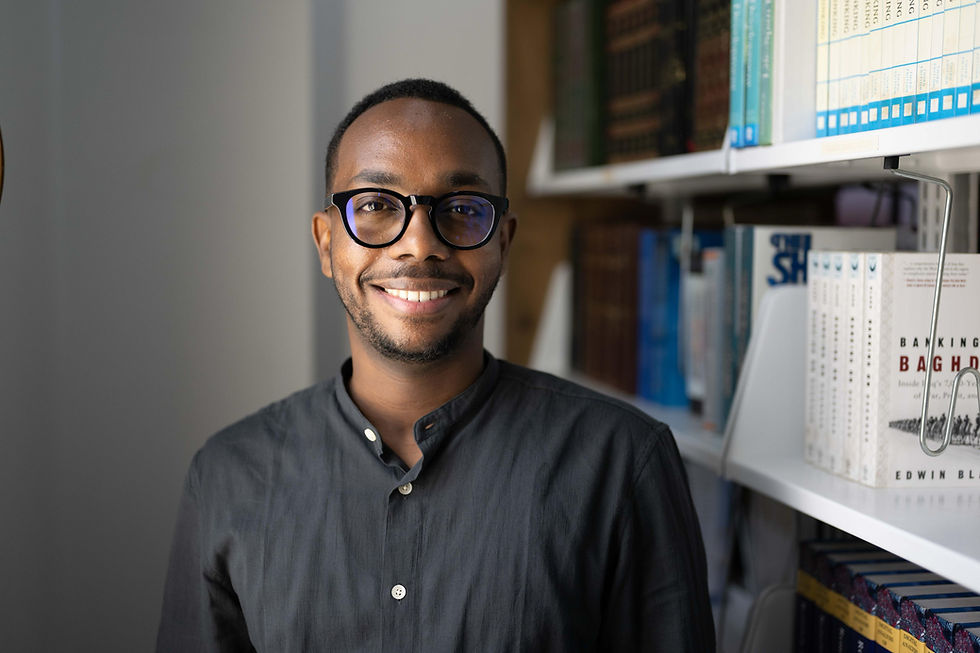
Mohamed Okash is a researcher and ecosystem builder specializing in social innovation, policy development, and institutional and human capital development. He employs strategic foresight to anticipate emerging challenges and craft transformative solutions for climate resilience and socioeconomic transformation in least-developed countries. As the founding director of the Institute of Climate and Environment (ICE) and a member of the Global Future Council on Nature and Climate at the World Economic Forum, Mr. Okash leads initiatives that shape sustainable and equitable


Comments